
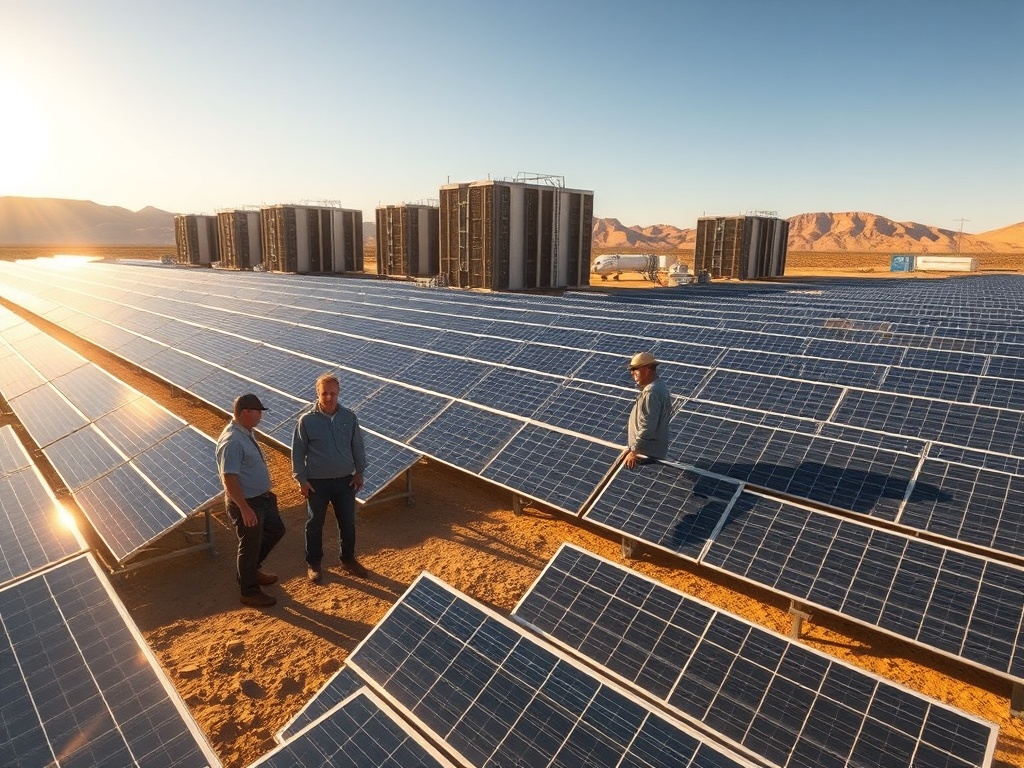

Meta announced on Tuesday it has reserved up to 1 gigawatt of capacity from space solar startup Overview Energy, with the first orbital demonstration planned for 2028 and commercial power delivery expected by 2030. According to company officials, the solar-powered data centers will use satellites in geosynchronous orbit to provide continuous energy, aiming to cut energy costs for AI infrastructure by 30 percent.
The first orbital demonstration of Meta’s space-based solar power system is scheduled for 2028, with commercial power delivery expected around 2030, company officials said. The initial pilot project will include 25 megawatts of capacity and 2.5 gigawatt-hours of energy storage, according to details provided by Overview Energy, the space solar startup partnering with Meta. Meta has reserved up to 1 gigawatt of capacity from Overview Energy, with an agreement that grants the company preferred access to future capacity once technology milestones are met.
Meta’s solar-powered data centers will rely on satellites positioned in geosynchronous orbit roughly 22,000 miles above Earth, where the sun is continuously visible.
This arrangement allows the satellites to collect solar energy uninterrupted by weather, time of day, or seasonal variations, then beam the energy to collectors on the ground. The collected sunlight will be converted into electricity for distribution through Earth-based power grids, according to Overview Energy representatives.
The company emphasized that the data centers themselves will remain on Earth for easier maintenance, cooling, and physical security. “Space serves exclusively as an energy source, not an operational site,” Meta officials said. This approach is intended to reduce the complexity and cost of managing data center operations in orbit, as grid connection is significantly more cost-effective than running data centers in space.
To support the continuous energy demands of AI infrastructure, Meta has also partnered with energy storage firm Noon Energy to secure up to 1 gigawatt of power capacity and 100 gigawatt-hours of long-duration energy storage. This storage solution will enable the retention of excess renewable energy generated during peak production periods and stabilize power availability during extended low-generation intervals, company sources confirmed. Meta described this as a critical component to address the intermittent nature of traditional renewable energy systems.
Meta’s broader energy strategy includes contracts for more than 30 gigawatts of clean, renewable energy, encompassing geothermal projects and agreements for 7.7 gigawatts of nuclear capacity. The company reported that 100% of the electricity used in its owned and operated data centers is matched with clean renewable energy, underscoring its commitment to securing reliable, long-term energy supplies to support future AI expansion.
Despite these plans, both the space-based solar power technology and the associated long-duration storage systems remain in early development stages, according to industry experts and company disclosures. Challenges such as satellite launch costs, in-orbit maintenance procedures, and the economic viability of scaling the technology have yet to be fully resolved. No commercial operation of space-based solar power has been realized to date, and the timeline for widespread deployment depends on the successful achievement of several technical milestones outlined in the partnership agreement.
Meta’s announcement on April 28, 2026, marks one of the most ambitious attempts to integrate space-based solar power into data center energy infrastructure. The company’s pilot phase will begin with a 25-megawatt capacity expansion, with plans for full deployment contingent on the technology’s performance during initial demonstrations. Officials indicated that the project aims to complement existing renewable energy sources and storage solutions within Meta’s extensive energy portfolio.


Comments are closed.