
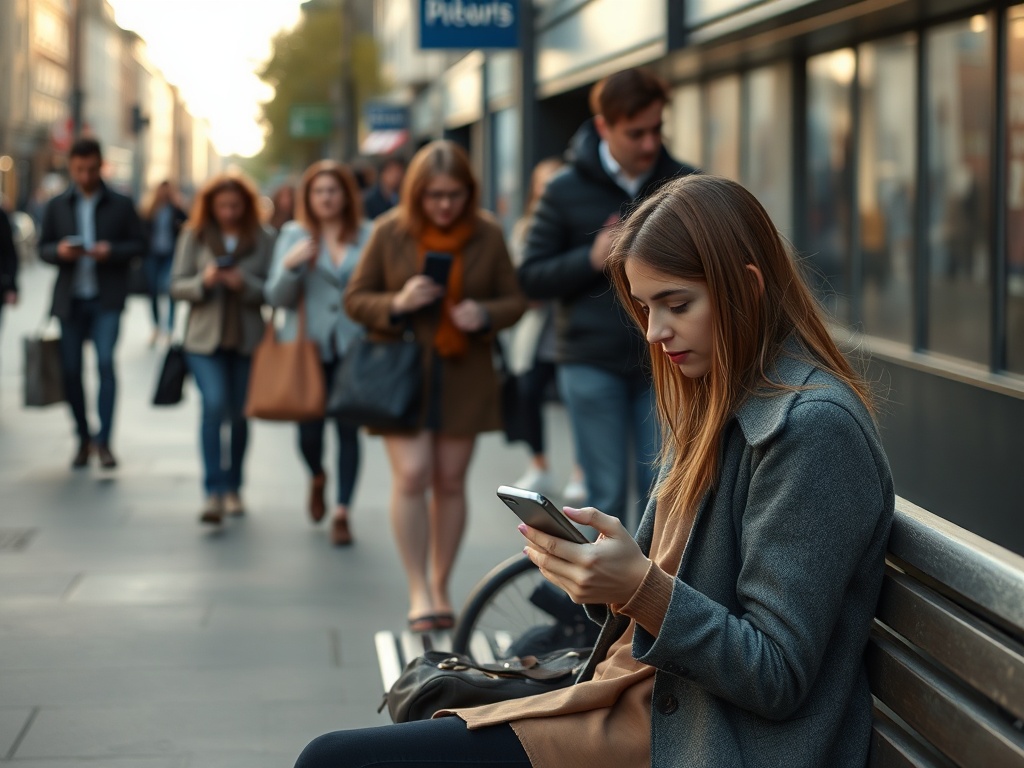

LONDON — Active social media usage among British adults declined to 49% in 2024, down from 61% the previous year, according to Ofcom’s latest survey. Officials attributed the drop to growing skepticism about digital life and increased mental health campaigns encouraging reduced online engagement.
The regulator attributes this drop to growing skepticism about the benefits of digital life and increased awareness of mental health risks associated with social media use. Fewer British adults now believe that the advantages of online engagement outweigh the risks, leading to more passive consumption and reduced exploration of new websites, Ofcom officials said.
Ofcom’s survey data shows a sharp decline in active social media participation in the UK, with only 49% of adults actively posting, sharing, or commenting in 2024, down from 61% in 2023 and 82% during 2021-2023.
Despite the decline in active posting, WhatsApp remains the most widely used social platform in the UK, reaching 79.9% of internet users in the third quarter of 2024, followed by Facebook at 72.3%, according to market data. However, Facebook’s active user base has contracted, mirroring the overall downward trend. The platform still holds a 55% market share with 50.6 million users as of May 2021, but Ofcom reports a significant drop in active engagement. Similarly, X (formerly Twitter) experienced a 6.7% decline in its UK advertising audience in the latest quarter, losing approximately 1.36 million users, reflecting a broader decrease in active participation on legacy platforms.
Time spent on social media in the UK also remains below the global average. Users spend an average of 16 hours and 13 minutes weekly on social platforms, compared to the global average of 18 hours and 36 minutes, according to recent analytics. YouTube sessions average 10 minutes and 20 seconds per visit, the longest among platforms, followed by TikTok at 7 minutes and 39 seconds. TikTok leads daily Android usage with an average of 1 hour and 14 minutes per day, while YouTube and Instagram follow with 1 hour and 46 minutes respectively. WhatsApp is opened 17.5 times daily on average, with Snapchat and Instagram also showing high open rates in the UK.
The decline in active social media use reflects a broader global trend. Financial Times analysis of data from more than 250,000 adults across 50 countries indicates that global social media usage peaked in 2022 and has been steadily declining since. This pattern aligns with the UK’s post-lockdown shift, where mental health campaigns and public discourse on online harms have influenced user behavior. Platforms like Facebook and X have faced criticism for hosting content related to conspiracy theories, violence, pornography, and spam, factors that have contributed to their reduced appeal, Ofcom and other sources confirmed.
While legacy platforms face challenges, some social networks are experiencing growth. Reddit’s UK advertising audience increased by 4.6% in the latest quarter, making it the fastest-growing major platform. Reddit has overtaken TikTok as the UK’s fourth most-visited social network, with an 88% increase in visits over the past two years. LinkedIn’s ad reach grew by 2.1%, adding approximately 1 million users, and YouTube’s audience expanded by 2%, or 1.1 million users. These platforms have attracted users across a wide range of income brackets, with YouTube reaching nearly all demographics monthly and 46% of users engaging daily, according to 2020 survey data.
The UK has approximately 68.1 million internet users, with 55.5 million social media user identities, averaging 6.2 platforms per user monthly. Facebook continues to dominate UK web traffic referrals from social media, accounting for 69.04% of referrals, a 15% increase year-over-year. Despite this, the shift toward passive use and reduced active engagement is evident across multiple platforms. Ofcom’s survey of British adults confirms the trend of declining active participation, with users becoming more cautious and selective in their online interactions.
These developments come amid increased public and regulatory scrutiny of digital platforms’ impact on mental health and well-being. The UK’s experience reflects a broader global reassessment of social media’s role following the peak usage period in 2022. As platforms continue to evolve, the balance between user engagement, content moderation, and mental health considerations remains a focal point for regulators, industry stakeholders, and users alike.


Comments are closed.